PILAPT is one of the most widely encountered names in pilot screening: flight schools and airlines across Europe, the Middle East and Asia use it as their first serious look at a candidate's raw aptitude. The battery is compact, heavily psychomotor, and famous for its tracking tasks; it is also entirely trainable in its cognitive components. This guide covers the reported modules, how the scoring reads you, and where to focus preparation.
What is the PILAPT Test?
PILAPT, the Pilot Aptitude Tester, is a computer-based selection battery developed by Symbiotics and used by flight training organizations and airlines for ab initio and cadet screening. It typically runs in a single sitting of roughly one to two hours, usually with a joystick for the control tasks, and reports a profile across modules rather than one pass mark; each operator sets its own bar.
Candidates commonly report a core module set: a tracking task flying a cursor against moving targets, often in single-axis and dual-axis stages; deviation and instrument monitoring; short-term memory items, spoken or displayed; pattern and reasoning items; and multitasking combinations where a tracking task continues while numbers or memory items arrive on top. The exact mix varies by operator and version, so treat any single report, including this one, as a sample rather than a syllabus.
Aviation Aptitude is an independent training platform with no affiliation to Symbiotics or PILAPT's operators; module lists are candidate-reported and the publisher revises the battery over time.
Which Skills Does PILAPT Test?
The reported cognitive modules map onto our catalog:
- Hand-eye coordination: continuous tracking with smooth, small corrections; a psychomotor skill our cognitive modules complement rather than replace
- Memory under pressure: short sequences held while other work continues, as in the digit span test and running memory span test
- Monitoring and deviation detection: catching drifting instruments, as in the monitoring test and error detection test
- Numerical fluency: quick arithmetic under load, as in the mental arithmetic test
- Reasoning: pattern continuation and rule finding, as in the number series test and logic and reasoning test
- Multitasking: cognition stacked on top of control, the combination trained in the divided attention test and cross-modal attention test
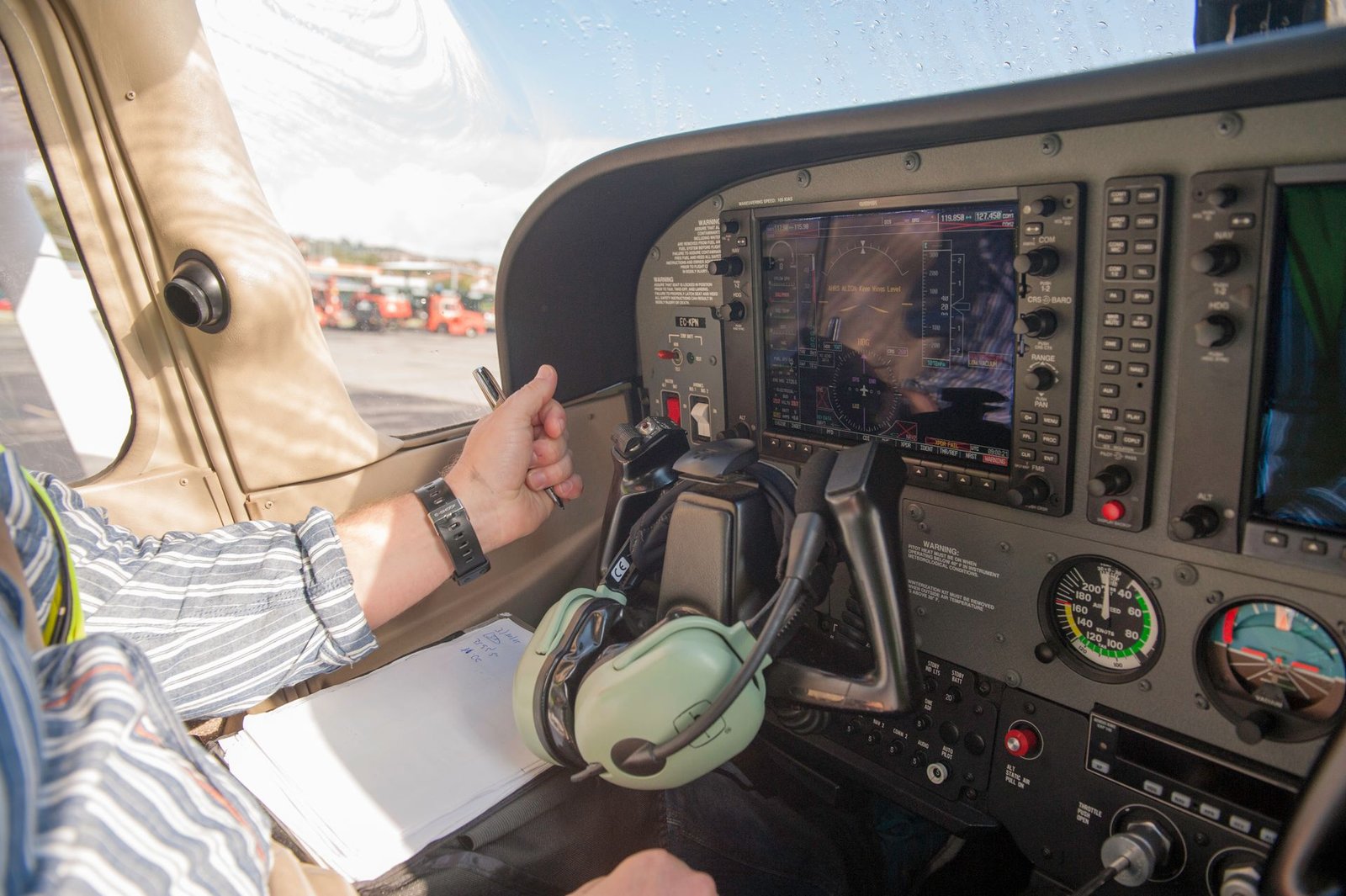
How the Test Runs
Sessions are proctored at a testing center or academy, module following module with short briefings and practice items. The tracking tasks reward smoothness over aggression: large stick inputs overshoot, and the score watches your error integral, not your enthusiasm. The multitasking stages are the battery's signature filter, adding mental arithmetic or memory items while the tracking continues; performance that survives the stack is what separates profiles. Results usually reach the operator as normed module scores, and many operators allow only one attempt per application cycle, sometimes with a long retest lockout.
PILAPT does not ask whether you can fly a cursor or do arithmetic. It asks whether you can do both at once without either collapsing.
How to Prepare: Strategies That Actually Work
- Get stick time, any stick time. Desktop simulator practice with gentle, continuous corrections builds the exact motor habit the tracking tasks score. Train smoothness first, speed never; the error integral rewards small inputs early.
- Train the cognitive load separately, then stacked. Bring mental arithmetic and memory spans to fluency alone, then practice them while doing something manual; the transfer to the combined stages is direct.
- Make multitasking the core week. The divided attention and monitoring modules reproduce the attention split that PILAPT's combination stages measure.
- Rehearse the sitting length. One continuous hour of chained modules, weekly; composure across a full battery is trainable and scored implicitly.
- Respect the one-attempt reality. With retest lockouts common, sitting PILAPT "to see what it is like" is a strategy error; arrive prepared or postpone the booking.
- Follow a structured plan. The 6 week study plan sequences the cognitive preparation; add short daily stick practice on top in the final three weeks.
Common Mistakes to Avoid
- Flying the tracking tasks with large, late corrections; the score integrates error continuously and punishes drama.
- Preparing puzzles only and meeting the psychomotor stages cold.
- Letting arithmetic accuracy collapse the moment tracking begins; that interaction is precisely what is measured.
- Booking the test before any full-length rehearsal, in a battery many operators allow once per cycle.
Frequently Asked Questions
How many attempts do you get at PILAPT?
Many operators allow one attempt per application cycle, sometimes with long retest lockouts, so treat the first sitting as the exam and prepare before booking.
Can you practise for PILAPT?
The cognitive half, memory, arithmetic, monitoring and multitasking, is fully trainable with timed modules; the psychomotor half responds to any gentle stick practice, including desktop simulators.
What is the hardest part of PILAPT?
Candidates most often name the combination stages, where arithmetic or memory items arrive while the tracking task continues; single-task polish does not survive them without deliberate stacked practice.
Practice This Skill
The cognitive half of PILAPT is fully trainable here: memory, arithmetic, monitoring, reasoning and multitasking modules in the Aviation Aptitude app run timed and leveled, with a free diagnostic to expose your weak areas first. Pair them with daily light stick practice, keep the mistakes guide in view, and arrive at the battery with nothing unfamiliar on the screen.