The RAF aptitude test is the first hard filter on the road to a Royal Air Force cockpit, and for pilot applicants it comes in two layers: a general multiple-choice aptitude test, then a day of computer-based aircrew testing at RAF College Cranwell. Many applicants treat the aptitude stages as a formality, which is exactly backwards. This guide walks through the official stage order, what each test measures, the retest rule and a preparation plan that matches the format.
Aviation Aptitude is an independent training platform with no affiliation to the Royal Air Force, the Ministry of Defence or the Officers and Aircrew Selection Centre. Stage descriptions below come from RAF Recruitment pages where stated; test content beyond that is candidate-reported and can change.
What is the RAF Aptitude Test?
"RAF aptitude test" is used loosely online for two different things. Most RAF roles use the Defence Aptitude Assessment (DAA), the test previously known as the Airman/Airwoman Selection Test (AST). RAF Recruitment describes it as a set of timed multiple-choice sections, and notes that different roles require different scores, so there is no single pass mark across the service.
Pilot applicants meet a similar first test, then something much more specific. The current RAF pilot page lists an eight-stage process:
- Stage 1: Aptitude test, six multiple-choice sections covering verbal reasoning, numerical reasoning, work rate, spatial reasoning, electrical comprehension and mechanical comprehension
- Stage 2: CBAT, the Computer Based Aptitude Tests, taken over one day at the Officers and Aircrew Selection Centre at RAF College Cranwell in Lincolnshire
- Stage 3: Suitability assessment, an interview checking motivation and readiness
- Stage 4: Health assessment
- Stage 5: Fitness test, the Pre-Joining Fitness Test taken locally
- Stage 6: OASC, the officer assessment at Cranwell
- Stage 7: Familiarisation visit
- Stage 8: Offer of service
So the "RAF pilot aptitude test" most people search for is really the CBAT: the aircrew battery that decides whether you are suitable to train as a pilot at all, before the officer qualities assessment looks at you.
The Stage 1 Aptitude Test
The six sections test general reasoning rather than aviation knowledge. Verbal and numerical reasoning are familiar from any graduate test. Work rate rewards fast, accurate symbol and code processing under a tight clock. Spatial reasoning asks you to picture shapes joined or rotated. Electrical and mechanical comprehension cover basic circuits, gears, levers and pulleys at roughly school physics level.
Each section is short and timed, so speed with accuracy matters more than depth. Candidates commonly report that the mechanical and electrical sections hurt people who have not studied physics for years.
The CBAT at RAF College Cranwell
The CBAT is where pilot selection actually begins. The RAF does not publish the battery item by item, but candidates commonly report a mix of:
- Instrument comprehension: reading attitude and heading instruments and choosing the matching aircraft picture, as in our instrument comprehension test guide
- Psychomotor coordination: keeping markers on target with a joystick and, in some tasks, rudder pedals, with both axes active at once; see the hand-eye coordination test guide
- Spatial orientation: working out position and direction from maps, views or rotated figures, as in the spatial orientation test
- Working memory and attention: holding and updating information while new items arrive
- Multitasking: a tracking or monitoring task continuing while arithmetic or memory items are added, as in the multitasking test
- Numerical speed: mental arithmetic without a calculator
An older RAF guidance note for CBAT candidates states that several tests, particularly those for the pilot branch, are the same ones used for Royal Navy Fleet Air Arm and Army Air Corps flying selection. That matters for retests, as explained below.
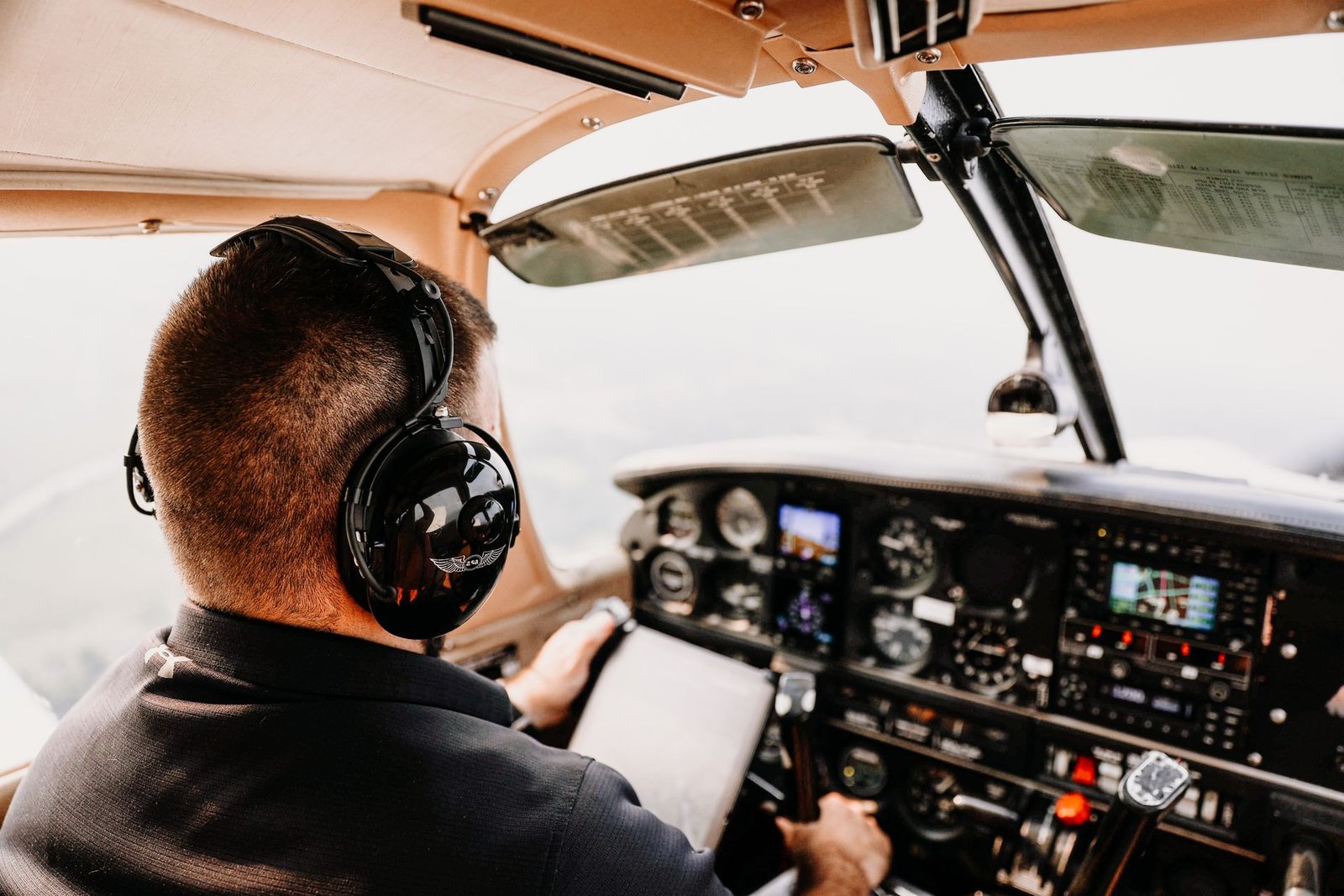
The CBAT is not a knowledge exam. It measures how cleanly you handle several streams of information at once, and that is a trainable habit.
OASC: The Officer Assessment
Stage 6 is the officer selection itself, run at the Officers and Aircrew Selection Centre. RAF Recruitment describes it as one day of assessment, with arrival the day before, in which assessors look at leadership, teamwork, communication, motivation and problem solving. An interview probes your motivation, your knowledge of the RAF and of the role, and current affairs.
The aptitude and OASC results are separate filters; a strong CBAT does not compensate for a weak interview. Our pilot interview questions guide covers how to prepare motivation and knowledge answers honestly.
Eligibility Basics
Requirements change, so confirm them on the official role page before applying. At the time of writing, the RAF pilot page states:
- Age: you can apply from 17 and a half; Phase One training at Cranwell must start before your 24th birthday
- Education: GCSEs at grade C/4 in English Language, Maths and at least three other subjects, plus a minimum of 64 UCAS points, or a UK degree at 2:2 or above with English and Maths GCSEs
- Nationality: UK citizenship or dual UK nationality, with a residency requirement
- Commitment: a minimum of 12 years' service
Retest Rules
RAF guidance for CBAT candidates states that there is no limit on the number of times an aptitude test may be taken, but at least one year must pass between attempts. The same guidance warns that because the pilot tests are shared with Fleet Air Arm and Army Air Corps selection, an attempt for one service starts the same waiting period before you can test for the others. The upper age limit can therefore cap the number of realistic attempts. That guidance is several years old, so check the current rule with your Armed Forces Careers Office.
How to Prepare for the RAF Aptitude Test
- Sit a timed practice of all six Stage 1 sections early. It shows which section needs real study rather than polish.
- Revise basic physics. Gears, pulleys, levers, series and parallel circuits: a few evenings with a GCSE textbook cover most of it.
- Train instrument reading until it is automatic. Attitude and heading must be read in one glance, not decoded.
- Build smooth control habits. Small, early corrections score better than large, late ones in every tracking task; the psychomotor tracking test guide explains why.
- Practise stacked tasks, not only single ones. Multitasking blocks expose any skill that is not yet automatic.
- Follow a structured plan. The 6 week study plan fits the gap between booking and test day.
Common Mistakes to Avoid
- Treating Stage 1 as a formality and meeting the electrical and mechanical sections cold.
- Arriving at Cranwell having never used a joystick for a sustained tracking task.
- Overcorrecting in tracking tasks, then chasing your own overshoot.
- Forgetting that one attempt starts a waiting period that also affects Navy and Army flying selection.
Frequently Asked Questions
What is on the RAF pilot aptitude test?
The first test has six timed multiple-choice sections: verbal, numerical, work rate, spatial, electrical and mechanical. Pilot applicants then sit the CBAT at RAF College Cranwell, which candidates commonly report includes instrument comprehension, psychomotor coordination, spatial orientation, memory and multitasking tasks.
Where is the RAF CBAT taken?
RAF Recruitment states that the CBAT takes place over one day at the Officers and Aircrew Selection Centre at RAF College Cranwell in Lincolnshire. OASC itself is a later, separate stage.
Can you retake the RAF aptitude test?
RAF guidance for CBAT candidates says there is no limit on attempts, but at least one year must pass between them, and an attempt for the Navy or Army flying tests starts the same clock. Confirm the current rule with your careers office.
Is there a pass mark for the RAF aptitude test?
The RAF does not publish one. Scores are compared against role-specific requirements, so a score that qualifies for one role may not qualify for pilot.
Practice This Skill
Train the CBAT-style formats with the Instrument Comprehension module, the Psychomotor Tracking module, the Multitasking module, the Spatial Orientation module and the Mental Arithmetic module. Level 1 of each is free. Applying in North America as well? Compare the Canadian Forces pilot selection guide and the AFOQT test guide.