Radio English is a designed language. Every word in a clearance has a defined meaning, every safety-critical instruction has a mandatory read-back, and the whole system exists so that a Spanish controller and a Korean pilot can move an aircraft through fog with zero ambiguity. Standard phraseology is that system, and both selection tests and the ICAO English exams probe whether you can use it and, just as importantly, whether you know when to leave it. This guide covers the structure, the essential calls, and the phraseology-to-plain-English switch.
What is Standard Phraseology?
Standard phraseology is the internationally agreed set of words and sentence patterns for radio communication between pilots and controllers, defined by ICAO and refined by national authorities. Its rules are strict on purpose: "affirm" instead of "yes" (which can vanish in static), "wilco" for "I will comply", "say again" instead of "what?", "standby" for "wait", and "unable" for "I cannot do that". Numbers follow the pronunciation rules of the aviation alphabet and number system: niner, decimal, digit by digit.
The backbone of the system is the read-back: safety-critical instructions must be repeated back so the controller can catch a mishearing. Clearances, runway instructions, headings, altitudes, speeds, frequencies and altimeter settings all get read back with your callsign; a bare "roger" is never an acceptable substitute for them. A typical exchange: "Speedbird 451, taxi to holding point Alpha, runway two seven left, via taxiway Bravo" is answered "Taxi to holding point Alpha, runway two seven left via Bravo, Speedbird 451."
The Calls Every Pilot Practises
- Read-backs: repeat the operative items plus callsign, in a stable order.
- Clarification: "say again", "confirm heading two seven zero", "I say again". Using these under pressure is scored as strength in selection role-plays, never weakness.
- Negatives and limits: "negative", "unable", "standby": short words that prevent long accidents.
- Position and intention reports: who you are, where you are, what you want, in that order.
- Urgency and distress: "pan-pan" three times for urgency, "mayday" three times for distress, followed by identity, position, problem, intentions and souls on board.
Our Role-play and Emergency module drills exactly these calls against recorded ATC audio, including blocked transmissions where "say again" is the only right answer, and the Sentence Practice module lets you repeat real clearances until the rhythm is automatic.
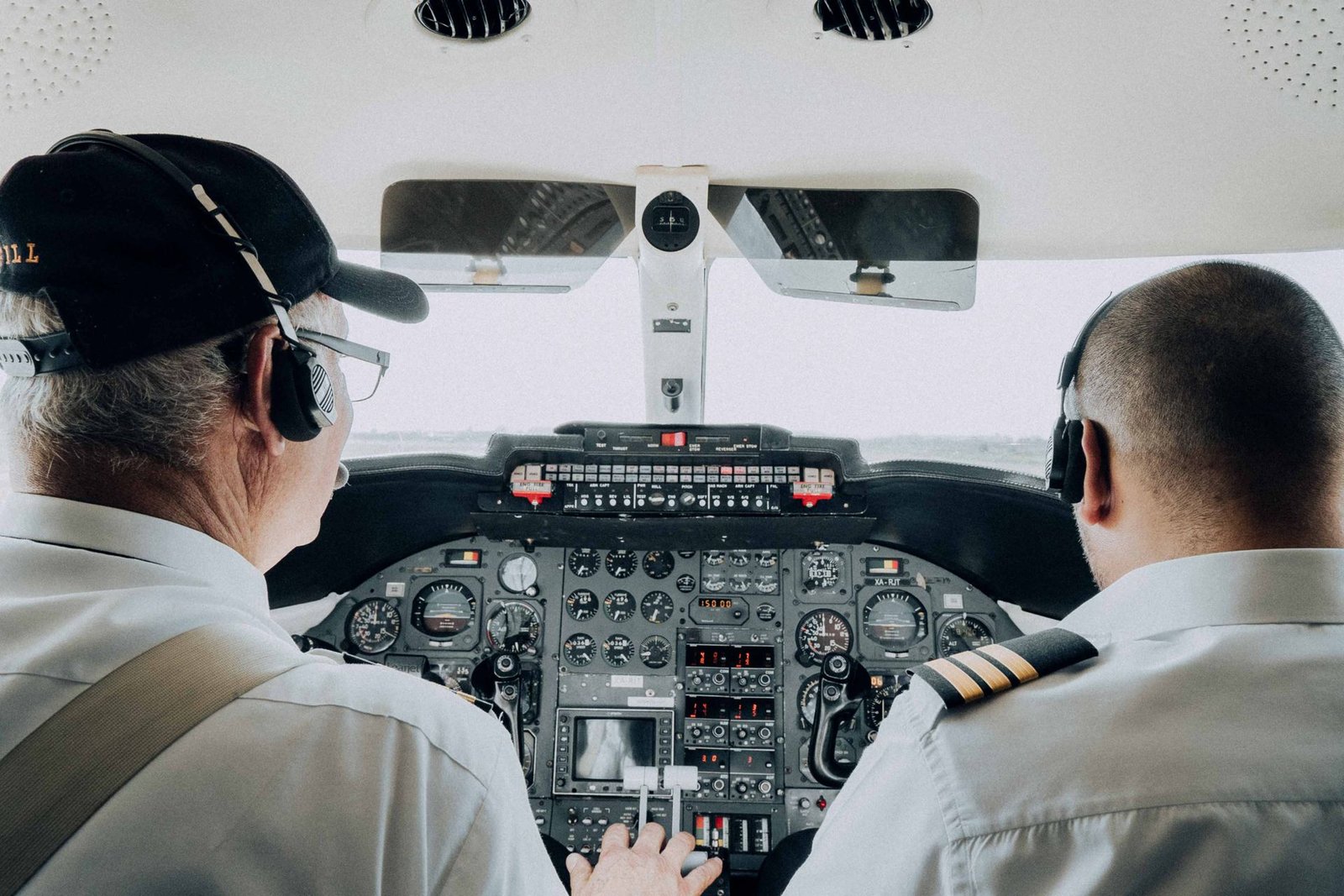
When Phraseology Ends: Plain English
The ICAO language requirements exist because phraseology cannot script everything. A sick passenger, a strange vibration, a fuel calculation, a misunderstanding: these demand clear, simple plain English layered on top of the standard calls. The examiner's ideal, in both the ICAO English tests and airline role-plays, is a speaker who keeps phraseology for what phraseology covers and switches smoothly to plain language for what it does not, without drifting into slang or long, tangled sentences.
Phraseology is for the expected. Plain English is for everything else. Fluent radio work is knowing which one this sentence needs.
How to Prepare: Strategies That Actually Work
- Learn patterns, not phrase lists. Read-backs follow a stable shape (items + callsign); once the shape is automatic, new content slots into it.
- Practise aloud against audio. Reading phraseology silently does not build the skill; repeating real recorded calls does. That is the whole design of Sentence Practice.
- Drill the numbers separately. Frequencies, headings and flight levels are where read-backs die; our alphabet and numbers guide covers the rules.
- Rehearse the switch. In role-play scenarios, notice the moment phraseology runs out and practise stating the problem in three short plain sentences.
- Make "say again" a reflex. Guessing a half-heard clearance is the single behaviour selection tests punish hardest.
- Listen to live ATC. Real frequencies teach tempo and rhythm no textbook can; summarising what you hear doubles as listening practice.
Common Mistakes to Avoid
- Answering a runway clearance with "roger" instead of a full read-back.
- Using conversational fillers ("yeah", "okay", "no problem") on frequency.
- Reciting phraseology perfectly but freezing the moment a situation needs plain English.
- Speaking fast to sound professional; clarity beats tempo every time.
Frequently Asked Questions
What is the difference between roger and wilco?
Roger means "I received your transmission"; wilco means "I received it and will comply". Safety-critical instructions need a full read-back, not either word alone.
Why do pilots say say again instead of repeat?
"Say again" is the standard phrase for a missed transmission; in some contexts "repeat" historically carried other operational meanings, so radiotelephony standardised on the unambiguous form.
Do I need perfect phraseology for the ICAO English test?
No; the ICAO test rates plain English. Phraseology matters in selection role-plays and on the radio itself, where read-backs and correction phrases are scored behaviour.
Practice This Skill
Phraseology becomes automatic through spoken repetition with feedback: the Aviation English track takes you from the free phonetic alphabet deck through real recorded clearances to full emergency role-plays scored on the ICAO criteria. For the exam context, see the aviation English test guide and the ICAO Level 4 requirements.